Job Analysis Tools
Job Analysis supports all other management activities including recruitment and selection, training and development need analysis, performance analysis and appraisal, job evaluation, job rotation, enrichment and enlargement, a right job-individual fit creation and regulation of entry and exit of talent in an organization. The process is the basis of all these important management activities, therefore, requires solid ground preparation. A properly performed job analysis is adequate for laying strong organization foundation.
There are various tools and techniques such as O*Net model, PAQ model, FJA model, F-JAS model and competency model that help HR managers to develop genuine job description and job specification data. Though not very new but these specialized tools and techniques are used by only a few of very high profile organizations. Not very common in use but once understood, these systematic approaches prove to be extremely useful for measuring the worth of any job in an organization.
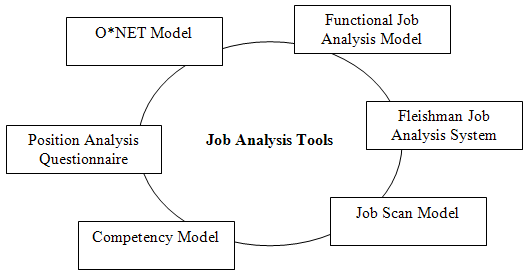
Job Analysis Tools
O*Net Model: The beauty of this model is that it helps managers or job analysts in listing job-related data for a very large number of jobs simultaneously. It helps in collecting and recording basic and initial data including educational requirements, physical requirements and mental and emotional requirements to some extent. It also links the level of compensation and benefits, perks and advantages to be offered to a prospective candidate for a specific job.
FJA Model: FJA stands for Functional Job Analysis and helps in collecting and recording job-related data to a deeper extent. It is used to develop task-related statements. Developed by Sidney Fine and his colleagues, the technique helps in determining the complexity of duties and responsibilities involved in a specific job. This work-oriented technique works on the basis of relatedness of job-data where complexity of work is determined on a scale of various scores given to a particular job. The lower scores represent greater difficulty.
PAQ Model: PAQ represents Position Analysis Questionnaire. This well-known and commonly used technique is used to analyze a job by getting the questionnaires filled by job incumbents and their superiors. Designed by a trained and experienced job analyst, the process involves interviewing the subject matter experts and employees and evaluating the questionnaires on those bases.
F-JAS Model: Representing Fleishman Job Analysis System, it is a basic and generic approach to discover common elements in different jobs including verbal abilities, reasoning abilities, idea generation, quantitative abilities, attentiveness, spatial abilities, visual and other sensory abilities, manipulative abilities, reaction time, speed analysis, flexibility, emotional characteristics, physical strength, perceptual abilities, communication skills, memory, endurance, balance, coordination and movement control abilities.
Competency Model: This model talks about the competencies of employees in terms of knowledge, skills, abilities, behaviors, expertise and performance. It also helps in understanding what a prospective candidate requires at the time of entry in an organization at a particular designation in a given work environment and schedule. The model also includes some basic elements such as qualifications, experience, education, training, certifications, licenses, legal requirements and willingness of a candidate.
Job Scan: This technique defines the personality dynamics and suggests an ideal job model. However, it does not discuss the individual competencies such as intellect, experience or physical and emotional characteristics of an individual required to perform a specific job.
Different tools can be used in different situation. Selection of an ideal job analysis tool depends upon job analysis needs and objectives and amount of time and resources.
| ❮❮ Previous | Next ❯❯ |
 Related Articles
- Job Analysis Process
- What to Collect during Job Analysis
- Job Analysis Methods
- Job Analysis Problems
- Advantages and Disadvantages
Authorship/Referencing - About the Author(s)

The article is Written and Reviewed by Management Study Guide Content Team. MSG Content Team comprises experienced Faculty Member, Professionals and Subject Matter Experts. We are a ISO 2001:2015 Certified Education Provider. To Know more, click on About Us. The use of this material is free for learning and education purpose. Please reference authorship of content used, including link(s) to ManagementStudyGuide.com and the content page url.