




Related Articles

Advantages and Disadvantages of Job Analysis Advantages and Disadvantages of Job Analysis Though job analysis plays a vital role in all other human related activities but every process that has human interventions also suffers from some limitations. The process of job analysis also has its own constraints. So, let us discuss the advantages and disadvantages of job analysis process at length. Advantages of Job Analysis Approaches to Job Design Approaches to Job Design Job design is the next step after job analysis that aims at outlining, and organizing tasks and responsibilities associated with a certain job. It integrates job responsibilities and qualifications or skills that are required to perform the same. There are various methods or approaches to do this. The important ones are discussed below Human Approach… Benefits of Job Rotation Benefits of Job Rotation Job rotation is considered as an effective tool for successful implementation of HR strategy. It is about settling employees at the right place where they can deliver the maximum results. In today’s highly competitive world, this can be proved as the best strategy to find the immediate replacement of a high-worth employee from within the… How Smart Job Rotation Policies Can Enhance Organizational and Employee Effectiveness How Smart Job Rotation Policies Can Enhance Organizational and Employee Effectiveness What is Job Rotation and How It Can Enhance Organizational Effectiveness Job Rotation or the practice of moving employees between various projects in organizations can enhance organizational and employee effectiveness. By ensuring that employees do not stagnate or remain stuck in a particular project for extended periods of time, organizations can actualize motivated and inspired… What to Collect during Job Analysis What to Collect during Job Analysis Gathering job-related information involves lots of efforts and time. The process may become cumbersome if the main objective of it is not known. Any information can be gathered and recorded but may be hazardous for health and finances of an organization if it is not known what is required and why. Before starting to conduct…


Search with tags

  • No tags available.

Job Rotation is a management approach where employees are shifted between two or more assignments or jobs at regular intervals of time in order to expose them to all verticals of an organization. It is a pre-planned approach with an objective to test the employee skills and competencies in order to place him or her at the right place. In addition to it, it reduces the monotony of the job and gives them a wider experience and helps them gain more insights.

Job rotation is a well-planned practice to reduce the boredom of doing same type of job everyday and explore the hidden potential of an employee. The process serves the purpose of both the management and the employees. It helps management in discovering the talent of employees and determining what he or she is best at. On the other hand, it gives an individual a chance to explore his or her own interests and gain experience in different fields or operations.
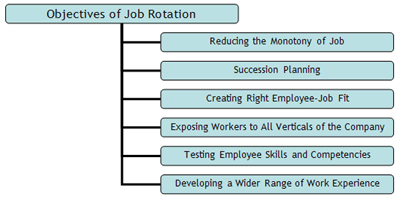
Job Rotation Objectives

Job Rotation Objectives

  • Reducing Monotony of the Job: The first and foremost objective of job rotation is to reduce the monotony and repetitiveness involved in a job. It allows employees to experience different type of jobs and motivates them to perform well at each stage of job replacement.

  • Succession Planning: The concept of succession planning is ‘Who will replace whom’. Its main function of job rotation is to develop a pool of employees who can be placed at a senior level when someone gets retired or leaves the organization. The idea is to create an immediate replacement of a high-worth employee from within the organization.

  • Creating Right-Employee Job Fit: The success of an organization depends on the on-job productivity of its employees. If they’re rightly placed, they will be able to give the maximum output. In case, they are not assigned the job that they are good at, it creates a real big problem for both employee as well as organization. Therefore, fitting a right person in right vacancy is one of the main objectives of job rotation.

  • Exposing Workers to All Verticals of the Company: Another main function of job rotation process is to exposing workers to all verticals or operations of the organization in order to make them aware how company operates and how tasks are performed. It gives them a chance to understand the working of the organization and different issues that crop up while working.

  • Testing Employee Skills and Competencies: Testing and analyzing employee skills and competencies and then assigning them the work that they excel at is one of the major functions of job rotation process. It is done by moving them to different jobs and assignments and determining their proficiency and aptitude. Placing them what they are best at increases their on-job productivity.

  • Developing a Wider Range of Work Experience: Employees, usually don’t want to change their area of operations. Once they start performing a specific task, they don’t want to shift from their comfort zone. Through job rotation, managers prepare them in advance to have a wider range of work experience and develop different skills and competencies. It is necessary for an overall development of an individual. Along with this, they understand the problems of various departments and try to adjust or adapt accordingly.

Job rotation is a well planned management approach that is beneficial both for employees and management.

Author Avatar

Article Written by

Ram Mohan Susarla

Ram Mohan Susarla is a seasoned freelance writer with nearly 18 years of experience creating content across diverse domains, including business, management, and literature. Before transitioning fully into writing, he spent over a decade in the corporate world, working with Fortune 100 companies as an Analyst and Project Leader. With an academic background in Engineering and professional training in Management, Ram brings analytical depth, strategic thinking, and clarity to his writing. His ability to translate complex management concepts into accessible, reader-friendly content has made him a valued contributor since the inception of Management Study Group.


Article Written by

Ram Mohan Susarla

Ram Mohan Susarla is a seasoned freelance writer with nearly 18 years of experience creating content across diverse domains, including business, management, and literature. Before transitioning fully into writing, he spent over a decade in the corporate world, working with Fortune 100 companies as an Analyst and Project Leader. With an academic background in Engineering and professional training in Management, Ram brings analytical depth, strategic thinking, and clarity to his writing. His ability to translate complex management concepts into accessible, reader-friendly content has made him a valued contributor since the inception of Management Study Group.

Author Avatar

Article Written by

Ram Mohan Susarla

Ram Mohan Susarla is a seasoned freelance writer with nearly 18 years of experience creating content across diverse domains, including business, management, and literature. Before transitioning fully into writing, he spent over a decade in the corporate world, working with Fortune 100 companies as an Analyst and Project Leader. With an academic background in Engineering and professional training in Management, Ram brings analytical depth, strategic thinking, and clarity to his writing. His ability to translate complex management concepts into accessible, reader-friendly content has made him a valued contributor since the inception of Management Study Group.

Author Avatar

Leave a reply

Your email address will not be published. Required fields are marked *

Management Study Guide